Grammy-winning North Carolina native and Americana's most prolific lifer — a songwriter's songwriter with dozens of albums and a long bluegrass streak alongside Ralph Stanley.
Raleigh Wide Open 2026 Lineup
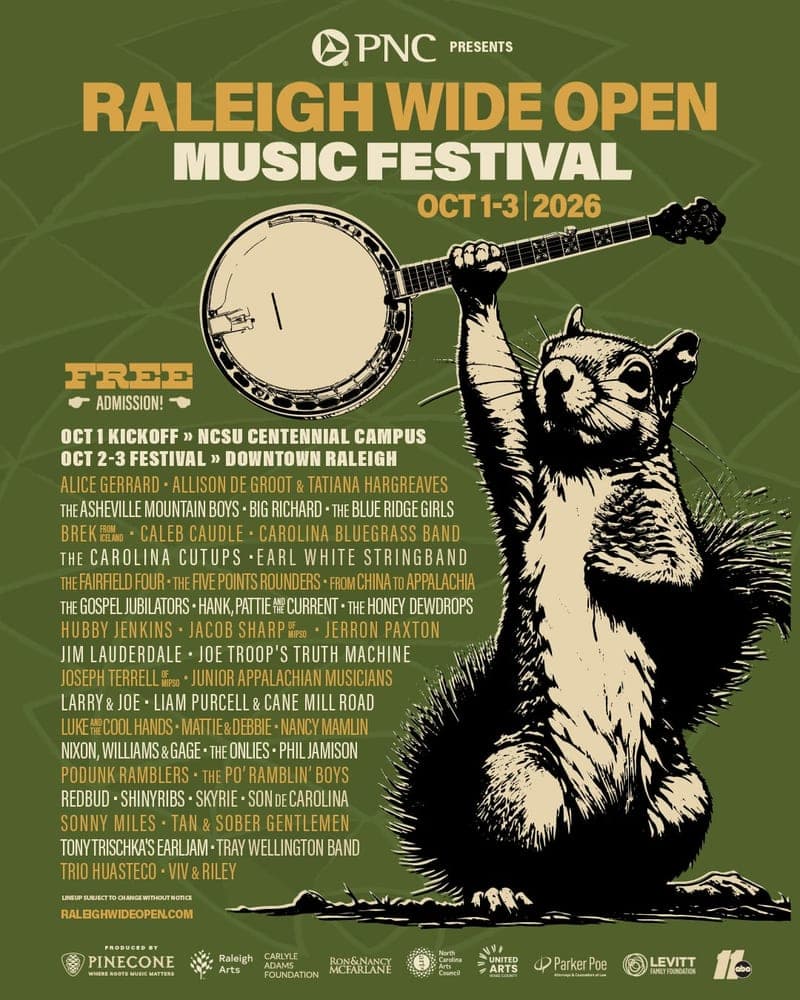
Free, downtown, and all bluegrass, old-time and roots: four outdoor stages plus square dancing on Martin Street.
Find the acts you'll love at Raleigh Wide Open
Name a few bands you love and we'll scout all 42 acts on the Raleigh Wide Open bill for the ones you shouldn't miss.
Build your Raleigh Wide Open schedule
Set times are out for Raleigh Wide Open 2026. Save any act and it lands on your day-by-day plan, with overlapping sets flagged so you can see what you would miss. No account needed to start.
About Raleigh Wide Open 2026
Raleigh Wide Open takes over downtown Raleigh on October 1-3, 2026, and it is free. The festival is produced by PineCone, the Raleigh nonprofit that has spent decades keeping Piedmont traditional music funded and audible, and the booking reflects that: bluegrass, old-time, gospel quartet singing, son jarocho, son huasteco and Icelandic folk on the same weekend, with nobody asked for a ticket.
Thursday October 1 is a free kickoff at The Corner on N.C. State's Centennial Campus with three of the festival's bands. The real weight lands Friday October 2 and Saturday October 3, when four outdoor stages (City Plaza, Davie Street, PineCone and Martin Street) run in parallel through the afternoon and into the night.
Two things set it apart from a normal roots bill. Martin Street is given over to square dancing both nights, 7:30 to 10:30, with Earl White Stringband and the Five Points Rounders playing and Phil Jamison and Nancy Mamlin calling. And the City of Raleigh Museum hosts artist interviews on Friday and author talks on Saturday, so Jim Lauderdale, the Fairfield Four, Brek and Alice Gerrard can be heard talking as well as playing.
Expect bluegrass, old-time, string band and progressive bluegrass across 42 acts.
Raleigh Wide Open 2026 lineup & schedule: all 42 acts
Search it, filter by day, stage or genre. Save anything straight to your schedule.Browse all 42 acts →
Search it, filter by day, stage or genre. Save anything straight to your schedule.
Kevin Russell's post-Gourds nine-piece — Texas blues, New Orleans funk, Memphis horns and border music, delivered in a technicolor suit with a ukulele.
A cappella gospel quartet organized in Nashville in the 1920s and still going — Grammy-winning, National Heritage Fellowship-honored, with a bottom end you feel in your chest.
Grammy-nominated East Tennessee band playing hard-charging traditional bluegrass with the road miles and the IBMA hardware to back up bandleader C.J. Lewandowski's claim that they live what they sing.
North Carolina band running Irish and Appalachian tune traditions through a punk-tempo string band — fiddle, banjo, and a lot of shouting.
Bluegrass Hall of Fame singer, fiddler and guitarist whose 1960s and '70s duo records with Hazel Dickens opened the music to generations of women; she also founded the Old-Time Herald.
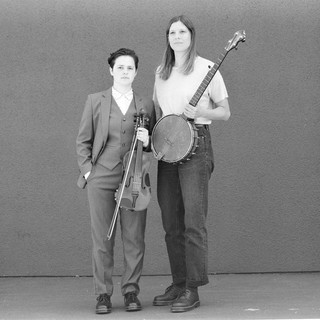
Banjo-and-fiddle duo who play tradition-deep old-time with an improviser's nerve — tight arrangements that periodically fly off into scratch, drone and noise.
All-women Colorado string quartet with conservatory chops and a bar-band mouth — ripping instrumentals, dark humor and songs that don't flinch.
Icelandic group splicing their own folk tradition into wider currents, and winners of the folk and world category at the Icelandic Music Awards.
North Carolina songwriter with an unhurried, warm-grained Americana voice; he self-produced Heavy Thrill at the Cash Cabin and put it out on his own label.
North Carolina Piedmont outfit playing old-time-leaning bluegrass with a rough edge and no interest in polish — porch music that never got sanded down for the stage.
Founding Green Grass Clogger Earl White leads one of old-time's most in-demand dance bands — a Black fiddler carrying forward a tradition Black communities built.
Grammy-winning roots duo Cathy Fink and Marcy Marxer with hammered dulcimer player Chao Tian, braiding Chinese classical melody into Appalachian string-band music.
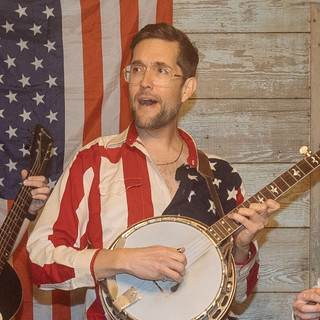
Banjoist Hank Smith and fiddler Pattie Hopkins Kinlaw front a bluegrass band that folds Motown, jazz and classical phrasing into the traditional frame.
Laura Wortman and Kagey Parrish, two voices and two instruments across two decades — clawhammer banjo, mandolin and electric guitar pushing quiet folk somewhere stranger.
Brooklyn-born multi-instrumentalist and Carolina Chocolate Drops alum who follows the African American thread running through America's traditional music forms — banjo, bones, and guitar in service of the story.

Mipso's mandolinist and co-founder, raised in the North Carolina mountains and now out on his own; solo debut Middle Kid was built from the musical friendships he made in Brooklyn.
Che Apalache founder Joe Troop convenes old-time and bluegrass friends into an openly political string band — the self-described "artivist" with a full backing crew.
Mipso co-founder turned solo songwriter, raised Quaker in the North Carolina Piedmont and writing plainspoken topical songs in the Guthrie–Seeger line for a very online age.
Venezuelan harpist Larry Bellorín and North Carolina banjoist Joe Troop trade llanera and Appalachian repertoire across harp, cuatro, banjo, fiddle and maracas.
High-country North Carolina band led by multi-instrumentalist Liam Purcell, tagged by No Depression as "the future of bluegrass" — innovation without abandoning the form.
Multi-instrumentalist Luke leads a band rooted in bluegrass tradition while writing toward a more personal voice — pickers' chops, songwriter's aims.
Drummer-singer Sean Trischka and guitarist Stash Wyslouch as a duo — bluegrass picking wired to top-40 hooks and lush harmony on their debut Satan's Junction.
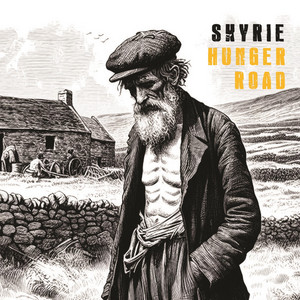
Contemporary Celtic trio from Fife driving Scottish and Irish tune traditions through rock and funk energy, with original songs and soundscapes between.
North Carolina collective playing son jarocho — the Veracruz string-and-zapateado tradition — and building community around the fandango, dance floor included.
Winston-Salem progressive R&B — gospel, funk, and hip-hop bent slightly askew; featured on Barack Obama's 2019 year-end playlist, and still climbing.
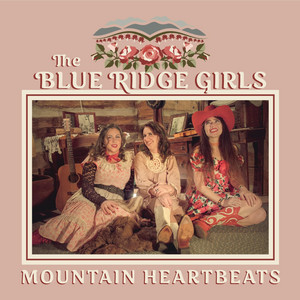
Jamie Collins, Martha Spencer and Brett Morris sing Blue Ridge standards and originals in honeyed three-part harmony, with clogging shoes on.
North Carolina Piedmont a cappella group singing together since 1972 in the jubilee style that runs back to the 19th century.
Young Seattle-rooted string band who grew up playing together, giving old-time a fuller, denser and more propulsive sound than the form usually allows.
Columbia, South Carolina five-piece splitting the difference between traditional bluegrass and modern jamgrass, at speed — porch tunes with race-car engines.
Banjo pioneer Tony Trischka built this tribute from tapes of Earl Scruggs and John Hartford jamming at Scruggs's house, transcribing the solos note for note so others could play them.
IBMA Momentum-winning banjoist leading a band of broad, thoroughly composed new-acoustic instrumentals — cerebral and intentional without ever getting cold.
North Carolina trio playing son huasteco from Hidalgo, Mexico — soaring improvised fiddle, falsetto harmony, and jarana-and-huapanguera drive, tradition kept dancing.
Vivian Leva and Riley Calcagno write future-leaning indie folk on an old-time backbone, sung in the tightly wound harmony style they both grew up inside.
Young western North Carolina band chasing the spirit rather than the surface of first-generation bluegrass — raw, driving and deliberately unsanitized.
The University of North Carolina's audition-only student bluegrass band, playing traditional and contemporary repertoire steeped in local tradition since 2016.
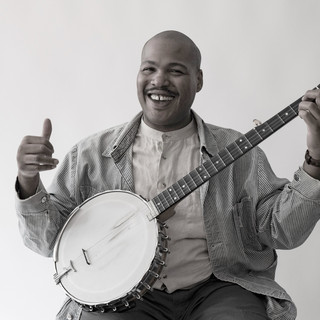
South Central Los Angeles multi-instrumentalist who plays prewar blues, rags and string-band music as inheritance rather than revival — his family's Great Migration route, run backwards.
North Carolina Piedmont dance caller of more than 30 years and a founder of Dare to be Square — everyone dances, no experience required.
Flatpicking bluegrass trio out of the North Carolina Piedmont — traditional repertoire played clean and quick.
Dance caller, flatfoot dancer and old-time musician — over forty years a Green Grass Clogger, dance consultant on the film Songcatcher, and author of Hoedowns, Reels, and Frolics.
Young Boone, North Carolina band honoring traditional bluegrass with a warm, contemporary edge — mountain-town roots played forward.
Durham-area string band playing the traditional old-time music of the southern Appalachians, tuned for a square dance floor rather than a listening room.
The headliners
The Fairfield Four — A cappella gospel quartet organized in Nashville in the 1920s and still going — Grammy-winning, National Heritage Fellowship-honored, with a bottom end you feel in your chest.
Jim Lauderdale — Grammy-winning North Carolina native and Americana's most prolific lifer — a songwriter's songwriter with dozens of albums and a long bluegrass streak alongside Ralph Stanley.
The Po' Ramblin' Boys — Grammy-nominated East Tennessee band playing hard-charging traditional bluegrass with the road miles and the IBMA hardware to back up bandleader C.J. Lewandowski's claim that they live what they sing.
Shinyribs — Kevin Russell's post-Gourds nine-piece — Texas blues, New Orleans funk, Memphis horns and border music, delivered in a technicolor suit with a ukulele.
The Tan & Sober Gentlemen — North Carolina band running Irish and Appalachian tune traditions through a punk-tempo string band — fiddle, banjo, and a lot of shouting.
Up-and-comers to catch early
Tray Wellington Band — IBMA Momentum-winning banjoist writing new-acoustic instrumentals with real compositional ambition.
The Onlies — A young string band who make old-time sound denser and more propulsive than the form usually allows.
Liam Purcell & Cane Mill Road — High-country North Carolina bluegrass that innovates without leaving the tradition behind.
 Redbud — Boone-based young band playing traditional bluegrass with a warm contemporary edge.
Sonny Miles — The bill's outlier: restless North Carolina R&B built from gospel, soul, funk and hip-hop.
Joseph Terrell — Mipso co-founder writing plainspoken topical songs in the Guthrie-Seeger line.
Brek — Icelandic folk group splicing their own tradition into wider currents; three appearances across the weekend.
- The Podunk Ramblers — Columbia, South Carolina five-piece running traditional bluegrass at jamgrass speed.
Other acts worth planning around
Alice Gerrard — Bluegrass Hall of Fame singer whose duo records with Hazel Dickens changed who got to play this music.
Tony Trischka's EarlJam: A Tribute to Earl Scruggs — Scruggs solos transcribed from unreleased tapes of Earl Scruggs and John Hartford jamming at home.
Big Richard — All-women Colorado string quartet with conservatory chops and a bar-band mouth.
- Earl White Stringband — A Black old-time fiddler and founding Green Grass Clogger, playing a set and both nights' square dance.
Larry & Joe — Venezuelan harp and North Carolina banjo trading repertoire across two continents' folk traditions.
Hubby Jenkins — Carolina Chocolate Drops alum playing twice on Saturday, on two different stages.
Caleb Caudle — North Carolina songwriter closing out Friday night on the PineCone Stage.
Viv & Riley — Old-time backbone, indie-folk melodies, and the weekend's tightest two-part harmony.
The lineup by day
Set times below cover Friday October 2 and Saturday October 3. Several artists play more than once across the weekend; the listed slot is their main stage set.
Thursday lineup (October 1)
Thursday set times (2 sets)
- Redbud · The Corner at NCSU's Centennial Campus
- Jerron Paxton · The Corner at NCSU's Centennial Campus
Friday lineup (October 2)
The Fairfield Four, Jim Lauderdale, The Tan & Sober Gentlemen, Big Richard, From China to Appalachia, Hank, Pattie & the Current + 15 more
Friday set times (21 sets)
- Luke & the Cool Hands · City Plaza Stage
- Brek · PineCone Stage
- Carolina Cutups · Davie Street Stage
- Nixon, Williams, & Gage · Martin Street Stage
- From China to Appalachia · City Plaza Stage
- Carolina Bluegrass Band (UNC) · Martin Street Stage
- The Gospel Jubilators · Davie Street Stage
- Asheville Mountain Boys · Martin Street Stage
- Hank, Pattie & the Current · City Plaza Stage
- Liam Purcell & Cane Mill Road · PineCone Stage
- Son de Carolina · Davie Street Stage
- Big Richard · City Plaza Stage
- The Fairfield Four · PineCone Stage
- Nancy Mamlin · Martin Street Stage
- Phil Jamison · Martin Street Stage
- Larry & Joe · City Plaza Stage
- Viv & Riley · Davie Street Stage
- Jim Lauderdale · PineCone Stage
- The Tan & Sober Gentlemen · City Plaza Stage
- Caleb Caudle · PineCone Stage
- Sonny Miles · Davie Street Stage
Saturday lineup (October 3)
The Po' Ramblin' Boys, Shinyribs, Allison de Groot & Tatiana Hargreaves, Earl White Stringband, Joseph Terrell, Tony Trischka's EarlJam: A Tribute to Earl Scruggs + 13 more
Saturday set times (19 sets)
- Earl White Stringband · City Plaza Stage
- The Podunk Ramblers · Davie Street Stage
- Trio Huasteco · PineCone Stage
- Tray Wellington Band · City Plaza Stage
- Joe Troop's Truth Machine · Davie Street Stage
- The Onlies · PineCone Stage
- Joseph Terrell · City Plaza Stage
- Hubby Jenkins · PineCone Stage
- Allison de Groot & Tatiana Hargreaves · City Plaza Stage
- The Blue Ridge Girls · Davie Street Stage
- Honey Dewdrops · PineCone Stage
- Tony Trischka's EarlJam: A Tribute to Earl Scruggs · City Plaza Stage
- Alice Gerrard · Davie Street Stage
- Jacob Sharp · PineCone Stage
- The Five Points Rounders · Martin Street Stage
- The Po' Ramblin' Boys · City Plaza Stage
- Skyrie · PineCone Stage
- Shinyribs · City Plaza Stage
- Mattie & Debbie · PineCone Stage
Raleigh Wide Open 2026 lineup FAQ
When and where is Raleigh Wide Open 2026?
October 1-3, 2026. Thursday October 1 is a kickoff at The Corner on N.C. State's Centennial Campus; the main festival runs Friday October 2 and Saturday October 3 across downtown Raleigh.
Is Raleigh Wide Open free?
Yes. Admission to the festival and to the Thursday kickoff is free. It is produced for the community by the Raleigh nonprofit PineCone.
What kind of music does Raleigh Wide Open book?
Bluegrass, old-time and Americana form the spine, alongside gospel quartet singing, Venezuelan llanera, son jarocho, son huasteco, Celtic music from Scotland, Icelandic folk and North Carolina R&B.
Where are the stages?
Four outdoor stages downtown (City Plaza, Davie Street, PineCone and Martin Street), plus the City of Raleigh Museum on Fayetteville Street for artist interviews and author talks.
Is there square dancing?
Yes. Martin Street Stage hosts a square dance from 7:30 to 10:30 on both Friday and Saturday, with Phil Jamison and Nancy Mamlin calling.
Who plays Thursday at Raleigh Wide Open 2026?
Thursday, October 1: Jerron Paxton, Redbud.
Who plays Friday at Raleigh Wide Open 2026?
Friday, October 2: The Fairfield Four, Jim Lauderdale, The Tan & Sober Gentlemen, Big Richard, From China to Appalachia, Hank, Pattie & the Current, plus 15 more acts.
Who plays Saturday at Raleigh Wide Open 2026?
Saturday, October 3: The Po' Ramblin' Boys, Shinyribs, Allison de Groot & Tatiana Hargreaves, Earl White Stringband, Joseph Terrell, Tony Trischka's EarlJam: A Tribute to Earl Scruggs, plus 13 more acts.
Are set times out for Raleigh Wide Open 2026?
Yes. The full schedule is live: the day-by-day section on this page lists every act with its set time.
Going to Raleigh Wide Open 2026? Get tickets ↗
Festivals like Raleigh Wide Open
More festivals
Festivals in October 2026 →Music festivals in North Carolina →More Bluegrass festivals →More Folk and Americana festivals →More R&B and Soul festivals →Full festival calendar →